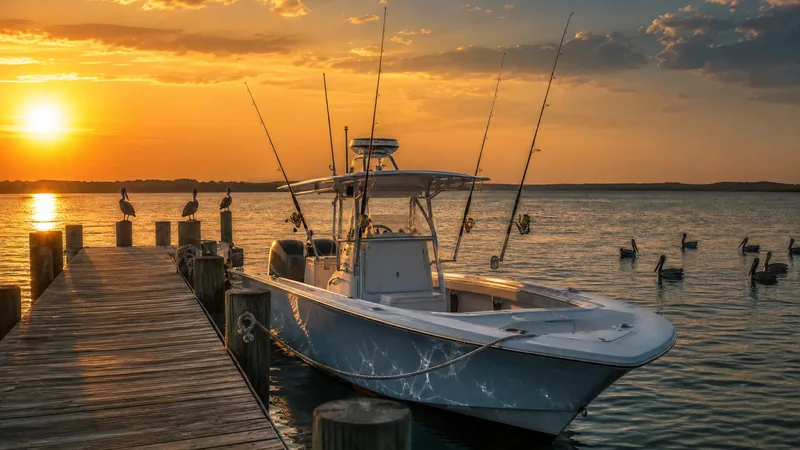
How to Start a Fishing Charter or Guide Business on the Texas Gulf Coast
How to Start a Fishing Charter or Guide Business on the Texas Gulf Coast
Introduction
Starting a fishing charter or guide business on the Texas Gulf Coast is achievable, but it is a regulated operation. Texas Parks and Wildlife Department (TPWD) requires you to hold a saltwater guide license, which mandates a valid U.S. Coast Guard Operator's License first. If you will operate in federal Gulf waters for reef fish, you will also need a federal charter permit from NOAA. This guide takes you through each requirement in order: business formation, Coast Guard credentials, TPWD licensing, federal permits, vessel registration, insurance, and tax obligations.
Timing depends mostly on whether you already hold a USCG Operator's License and on agency processing. The process cannot be skipped.
Materials and Prerequisites You'll Need
Before filing any paperwork, ensure you have or can obtain the following:
- U.S. Coast Guard Operator's License (captain credential): Required before TPWD will issue your guide license. Ask the National Maritime Center for current processing times and fees. TPWD will not proceed without this.
- A vessel: You must identify the boat you will operate (owned, chartered, or to be purchased). It must be seaworthy, suitable for paying passengers, and properly insured with liability coverage.
- Valid government-issued photo ID and Social Security number: Have these ready for the license applications.
- Proof of USCG Operator's License: Keep a current copy ready for your TPWD application.
- Business formation documents: Certificate of Formation (LLC or corporation), if you choose a business entity. Sole proprietorships require no Secretary of State filing.
- Marine insurance quotes: Contact a marine insurance broker specializing in charter operations, since premiums vary widely.
- Vessel documentation info: Hull identification number (HIN), USCG documentation number or state registration number, if applying for federal permits.
Step-by-Step Instructions
Step 1: Choose Your Business Structure and Register It
Decide whether to operate as a sole proprietor, LLC, or corporation.
Sole Proprietor: No filing with the Texas Secretary of State is required. You may file an Assumed Name Certificate (also called a DBA, or "doing business as") with your county clerk if you use a name other than your legal name. County fees vary by county. The filing is required if you use a name other than your legal name.
LLC (Limited Liability Company): Provides personal liability protection. File a Certificate of Formation with the Texas Secretary of State. Fee is $300. File online through SOSDirect at https://direct.sos.state.tx.us/acct/acct-login.asp for the fastest processing. The Secretary of State does not guarantee a turnaround.
Corporation: Also provides liability protection and may offer tax advantages. Certificate of Formation fee is also $300. File the same way as an LLC through SOSDirect.
Action: Decide which structure fits your situation. If LLC or corporation, file the Certificate of Formation online. Keep a copy of your filing confirmation for your records.
Step 2: Obtain Your U.S. Coast Guard Operator's License
This is a hard requirement before TPWD will issue your guide license. If you already have one, skip to Step 3.
The USCG Operator's License (also called a captain's license or master's license) proves you have the training and sea experience to operate a vessel carrying paying passengers.
Action:
- Visit the USCG National Maritime Center online at https://onlineservices.uscg.mil/
- Apply for a Merchant Mariner Credential (MMC) with the Operator (OUPV) or Master endorsement that fits your vessel and operating area
- You will need to meet the National Maritime Center's medical, sea service and examination requirements; check the NMC for the current forms and sea service days
- Take an approved USCG exam prep course (offered by community colleges and maritime training centers) or study independently and take the exam
- Mail your completed application and documents to the NMC or apply in person at a regional office
- Check the NMC for current processing times and fees
- You will receive a physical MMC credential card. This is your captain's license
For Texas Gulf Coast fishing, the right Operator or Master endorsement depends on your vessel and operating area. Discuss your vessel's size and intended operating area with an NMC advisor to confirm the right category.
Step 3: Apply for Your Texas Parks and Wildlife Saltwater Guide License
TPWD administers two types of guide licenses. Most charter operators apply for the saltwater guide license.
Saltwater Guide License (for motor vessel guides in coastal waters):
- Requirements: Valid U.S. Coast Guard Operator's License (check TPWD for any other requirements)
- Application: Apply through TPWD at https://tpwd.texas.gov/business/permits/fishing/
- Fee: The statutory base is $75, but TPWD sets the actual fee, which may be higher. Check the current TPWD fee schedule before applying
- Processing time: check with TPWD
- License term: check with TPWD
Paddle Craft Guide License (for kayaks, canoes, paddleboards): If you will guide exclusively from paddle craft, you need this separate license instead. Requirements include CPR certification, a boater education certificate, and proof of a paddle craft leading course. Fee is comparable; check TPWD's schedule.
Action: If you will use a motorized charter vessel, apply for the Saltwater Guide License. Have your USCG Operator's License number and Texas driver's license ready. Submit your application to TPWD.
Step 4: Obtain Federal Reef Fish Charter Permit (if operating in federal waters)
If you will take paying customers fishing in federal Texas Gulf waters (beyond Texas state waters, which extend three marine leagues, about 9 nautical miles, into the Gulf) for reef fish such as grouper, snapper, or amberjack, you must hold a Gulf Charter/Headboat Reef Fish permit from NOAA Fisheries.
Texas state waters (out to three marine leagues, about 9 nautical miles) do not require this federal permit. However, many guides operate in federal waters for better fishing, so this permit is often necessary for a viable business.
Red Snapper Regulations (important for your planning):
- Texas state waters: Open year-round for private anglers (4 fish, 15 inch minimum per TPWD)
- Federal Gulf waters: Fishing dates for private anglers change annually. Vessels holding federal reef fish permits are not subject to private closures
- For-hire vessels (charter boats) must hold the federal reef fish permit to operate legally in federal waters
- Check NOAA Fisheries at https://sero.nmfs.noaa.gov/ and TPWD for current red snapper season dates before each season
Action:
- Contact NOAA's Southeast Regional Office (SRO) at https://sero.nmfs.noaa.gov/ or call for a Gulf Charter/Headboat Reef Fish permit application
- Provide the vessel information and documents the NOAA application requests
- Fee: Check the current NOAA fee schedule
- Processing: check with NOAA Fisheries
- Once approved, follow NOAA's rules for carrying and displaying your permit
Step 5: Register and Document Your Vessel
You must register your vessel in Texas. Federal documentation is optional but recommended for offshore operations.
State Registration (required in Texas):
- Register through TPWD's boat registration process (check TPWD for where to file)
- Fee: check the current TPWD fee for your vessel
- Provides a registration number (example: TX 1234 AB)
- Display this number on your hull per TPWD rules
Federal Documentation (optional, recommended):
- File with USCG National Vessel Documentation Center
- Fee: check the National Vessel Documentation Center for the current fee
- Provides official documentation and the vessel's hull ID number (HIN)
- May be required for certain federal permits
- Processing: check with the National Vessel Documentation Center
Action: Register your vessel with Texas (required). Apply for federal documentation if you operate offshore (recommended for reef fish operations). Post your registration numbers visibly on the hull and carry all documentation on board.
Step 6: Obtain Marine Liability Insurance
Operating a charter business without insurance is extremely risky. One accident could bankrupt you. Marine liability insurance is essential.
Action:
- Search for a "marine insurance broker" or "charter vessel insurance" specialist in Texas
- Request quotes for a fishing charter operation. Specify: your vessel size, horsepower, number of passengers, operating area (state vs. federal waters), and any crew you will hire
- Coverage commonly includes general liability, hull coverage (if you own the vessel), and workers' compensation (if you hire employees)
- Expected annual cost varies with your vessel, operating area, and coverage limits; get written quotes
- Ensure your policy explicitly covers paying customers and charter fishing
- Keep proof of insurance on board and with all your permits
Step 7: Apply for a Sales Tax Permit (if applicable)
Texas requires a sales tax permit if you are selling taxable goods or services. Guide services alone are typically not taxable, but if you sell bait, tackle, or other items, you will need one. Check with the Texas Comptroller to confirm your situation.
Action:
- If you are a sole proprietor charging only for guide services: Sales tax permit likely is not required, but call the Comptroller to confirm
- If you are an LLC, corporation, or selling taxable goods: Apply for a Sales and Use Tax Permit at https://comptroller.texas.gov/taxes/permit/
- Fee: Free
- Processing: 2 to 3 weeks typically
Step 8: Register for Payroll and Unemployment Insurance (if hiring crew)
If you will hire employees (deckhands, mates, or other crew), you must register with the Texas Workforce Commission.
Action:
- Visit https://twc.texas.gov/employers
- Register for unemployment insurance and payroll tax reporting
- Obtain an Employer Identification Number (EIN) from the IRS if you are not a sole proprietor or if you are a sole proprietor with employees
Step 9: File Your Annual Franchise Tax Report
Texas has no corporate income tax, but most business entities must file an annual Public Information Report with the Texas Comptroller of Public Accounts. This is due by May 15 each year.
Who must file: All LLCs, corporations, partnerships, and other entities registered with the Secretary of State
Do you owe tax? If your total revenue is $2,650,000 or less for the 2026 and 2027 report years, you owe no franchise tax. However, you must still file the Public Information Report. No filing fee applies, but late filing incurs penalties.
Action:
- Mark your calendar: First report due May 15 of the year after you start operations
- File online through the Comptroller's website at https://comptroller.texas.gov/
- No filing is required with the Secretary of State after your initial formation; only the Comptroller gets the annual report
Step 10: Establish Operating Protocols and Begin Marketing
Now that you are licensed and legal, set your business up for success.
Action:
- Choose your target market: offshore reef fishing, shallow-water bay fishing, wade fishing, etc.
- Research competitor pricing in major Texas coastal markets (Corpus Christi, Port Aransas, and Galveston).
- Draft a liability waiver for customers to sign. Consult a Texas attorney; do not simply copy a template
- Create a booking system (phone, email, or website)
- Establish safety protocols: How many anglers per trip? What safety equipment is required? What is your emergency procedure?
- Build a website or social media presence (Instagram, Facebook)
- Join fishing charter directories such as GetMyBoat or FishingBooker
- Post photos of catches and satisfied customers
- Collect Google and TripAdvisor reviews from your first customers
- Partner with local tackle shops, hotels, and restaurants for referrals
- Consider joining a professional guide association for credibility and networking
Tips and Common Mistakes to Avoid
Do
- Get licensed before operating. Operating without a TPWD guide license is illegal. Operating without the license can bring penalties, so confirm the current rules with TPWD.
- Keep your USCG license current. Renew before expiration. TPWD requires a valid USCG Operator's License for the guide license, so a lapse puts your TPWD license at risk.
- Monitor red snapper and fishing regulations closely. Federal and state rules change seasonally and year to year. Subscribe to email alerts from NOAA and TPWD.
- Maintain your vessel meticulously. A breakdown mid-charter ruins your reputation and strands your customers.
- Keep insurance current. It is far cheaper than a lawsuit.
- Communicate clearly with customers. Publish your cancellation policy, what is included (tackle, bait, ice, coolers), what customers should bring, and what to expect.
- Keep detailed logbooks. Document all trips, customers, catch, and any incidents. This protects you legally and helps prove your sea service if you renew your USCG license.
Avoid
- Confusing state and federal waters regulations. Texas state waters (out to three marine leagues, about 9 nautical miles) are open year-round to private anglers for red snapper (4 fish, 15 inch minimum per TPWD). Federal Gulf waters have seasonal closures for private anglers. Operating without the federal permit in federal waters is illegal.
- Operating without the federal reef fish permit in federal waters. NOAA can cite you, and you may face significant penalties.
- Underestimating the time to get your USCG license. The medical exam and background check take weeks. Start this process before you invest in a vessel.
- Cutting corners on insurance. One lawsuit without coverage ends your business.
- Missing the franchise tax filing deadline. Even if you owe no tax, filing late triggers penalties.
- Ignoring changes in fishing regulations. Closure dates, catch limits, and minimum sizes change. Staying current is your responsibility as a guide.
Expected Results and Timeline
Realistic Timeline
- If you already have a USCG Operator's License: timing depends on TPWD and NOAA processing
- If you need the USCG license first: add the National Maritime Center's processing time
What to Expect Annually
- TPWD guide license: confirm the renewal term with TPWD
- NOAA reef fish permit: Renew annually
- Vessel registration: check the renewal term with TPWD
- Marine insurance: Renew annually
- Franchise tax report: File annually by May 15
- USCG Operator's License: Renew every 5 years
Income Potential
Income varies widely based on how aggressively you market and operate. Operating costs such as fuel, insurance, maintenance, crew wages and dock fees reduce what you keep. Your profit depends on your efficiency and local market demand. First-year earnings are often lower as you build your reputation and customer base.
Booking demand on the Texas Gulf Coast varies by season and target species, so plan your cash flow accordingly.
Disclaimer
This article is informational only and does not constitute legal, tax, accounting, or financial advice. Fishing guide licensing, federal reef fish regulations, and related business requirements are complex and subject to change. Before you invest in equipment, a vessel, or labor, consult a Texas-licensed attorney with experience in maritime law and a certified public accountant (CPA) with experience in fishing businesses or charter operations.
Verify all fees, license requirements, regulations, and processing times with the official sources:
- Texas Parks and Wildlife Department: https://tpwd.texas.gov/
- NOAA Fisheries (federal Gulf permits): https://sero.nmfs.noaa.gov/
- U.S. Coast Guard (Operator's License): https://onlineservices.uscg.mil/
- Texas Comptroller of Public Accounts (tax): https://comptroller.texas.gov/
- Texas Secretary of State (business formation): https://www.sos.state.tx.us/corp/index.shtml
Keep exploring: related Texas guides
- How to Start an Event Venue or Wedding Barn Business in Texas
- How to Start a Short-Term Rental in Austin
- How to Start a Short-Term Rental in Dallas
- How to Start a Short-Term Rental Business in Texas
- How to Start an LLC in Texas
- Texas Business License
- How Much Does It Cost to Start a Business in Texas
- All Texas business types
- Every Texas guide in one place